Under 3 mm Thin
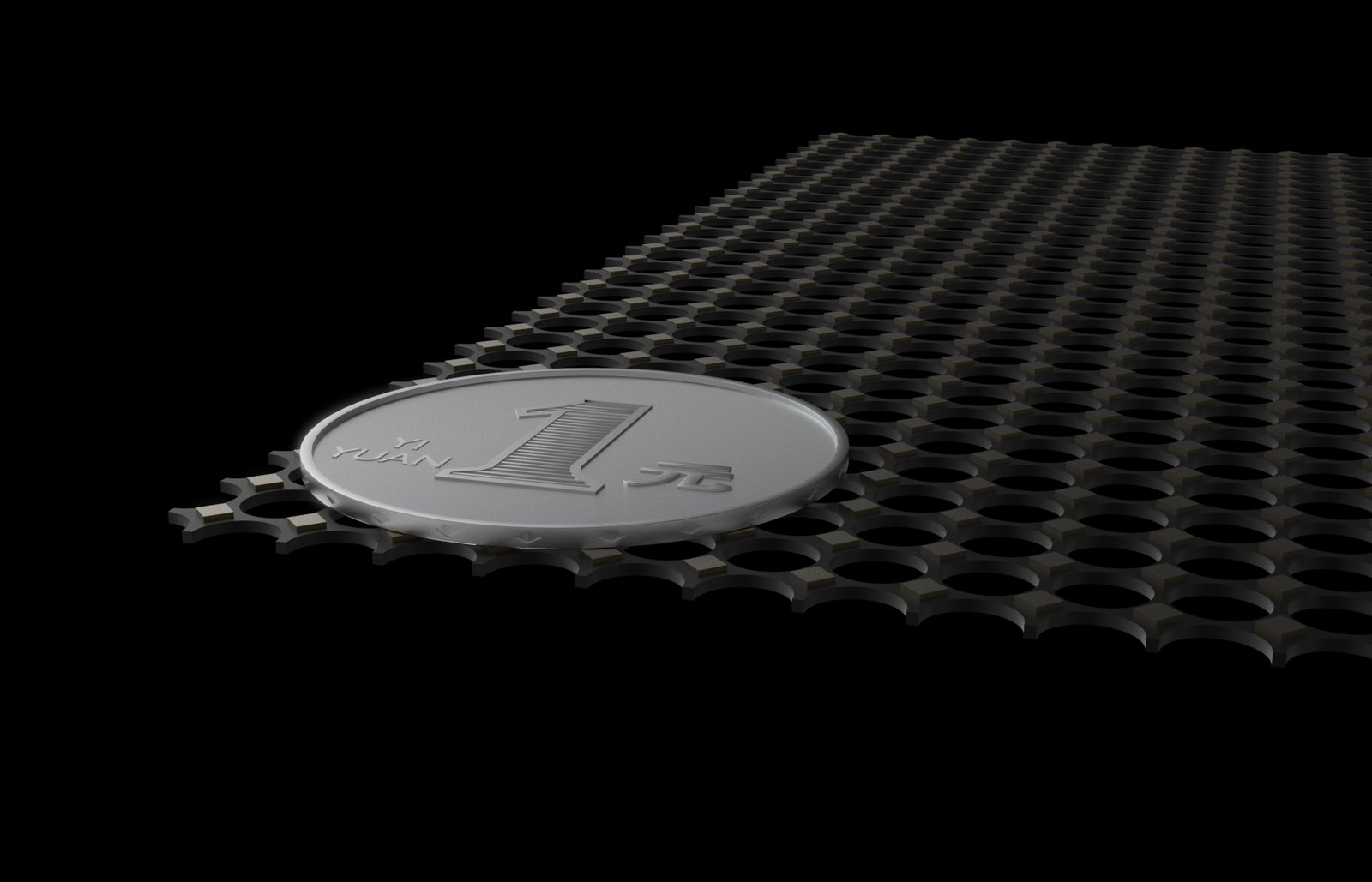
The screen body measures less than 3 mm — bonded to glass it reads as part of the glazing itself. Next to a coin, the panel edge almost disappears.
Invisible on the glass. Unmissable when it plays.
A high-density holographic invisible screen under 3 mm thick — borderless hollow-mesh PCB that all but disappears on glass, and floats imagery when lit.
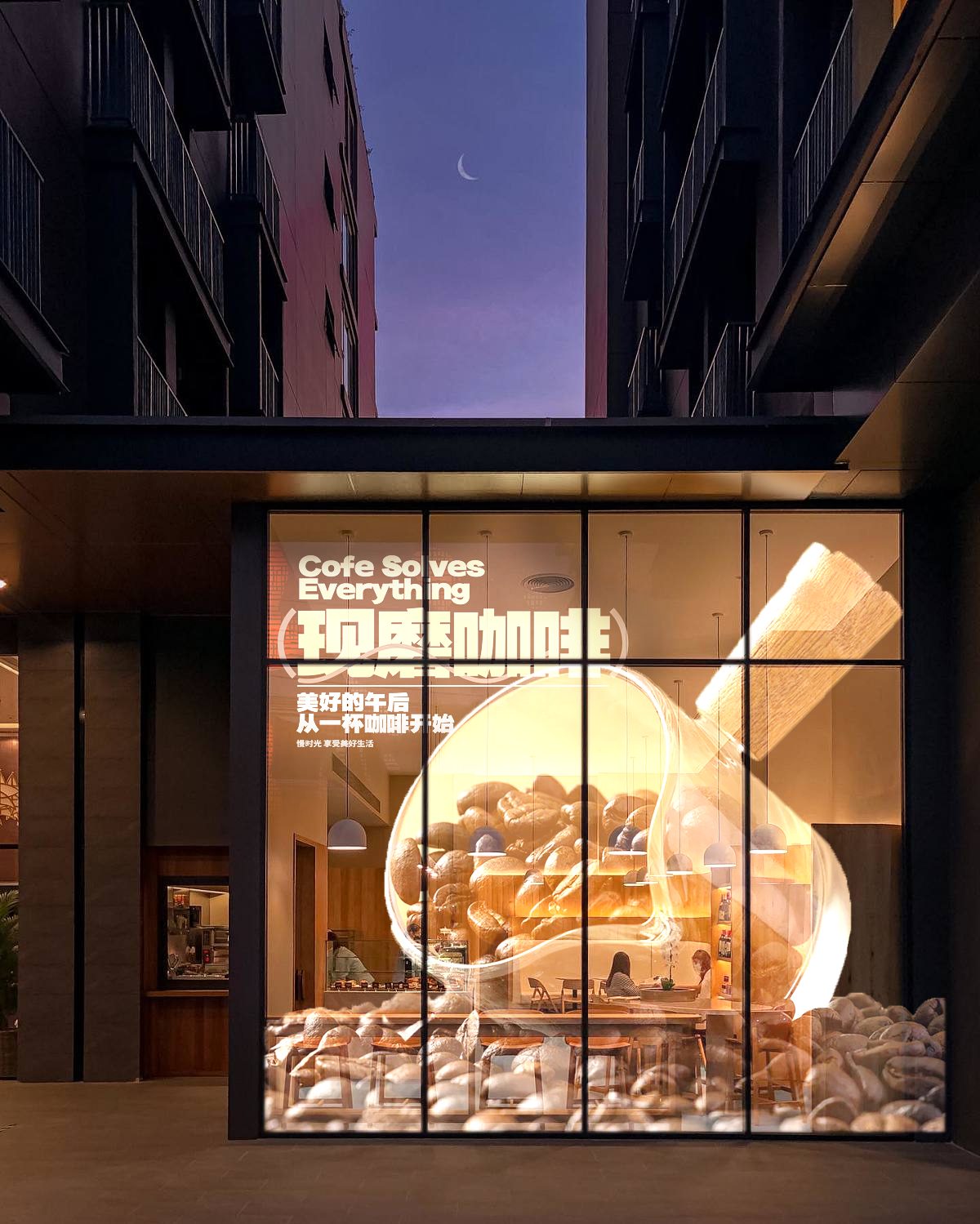
The SMD Holographic Invisible Screen is built on a hollow, mesh-pattern circuit PCB with a fully borderless structure. At under 3 mm thick it can be bent, cut to size, and bonded onto transparent glass until screen and glazing read as a single surface. Proprietary driver ICs and tight process control keep perceived transparency above 80% across the range — up to 93% on P10. High pixel density renders fine detail at close range, with 60 fps playback and high-refresh 3D at 120 fps, so content appears to float on the glass. A natural fit for premium shop windows, glass curtain walls, showrooms, cultural venues, and auto dealerships.
The screen body measures less than 3 mm — bonded to glass it reads as part of the glazing itself. Next to a coin, the panel edge almost disappears.
From just 1.2 kg per module, panels carry to site and onto the glass without lifting gear — faster installs, lower cost.
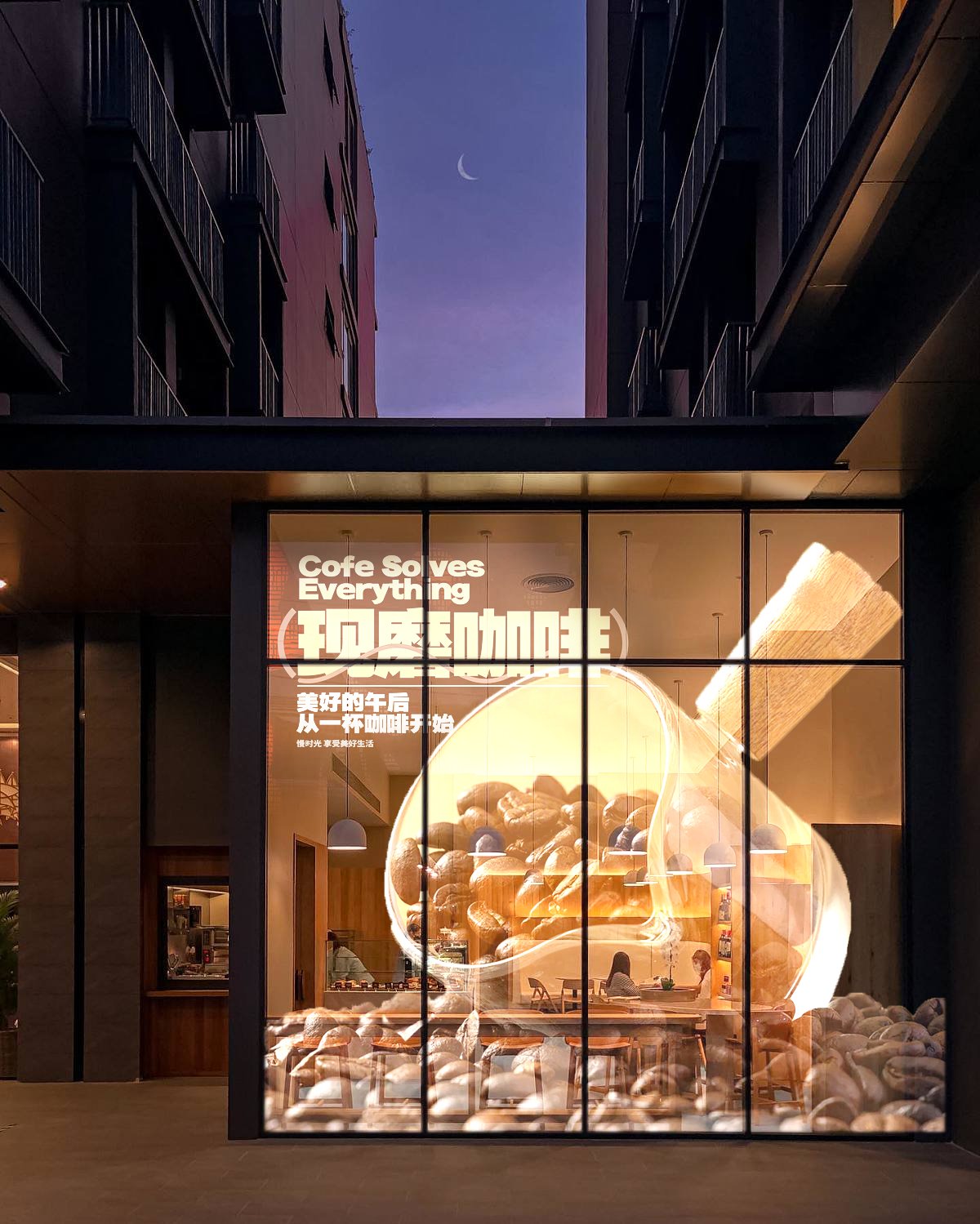
Modules curve against inner arcs and trim to size, following shaped and irregular glazing without custom tooling.
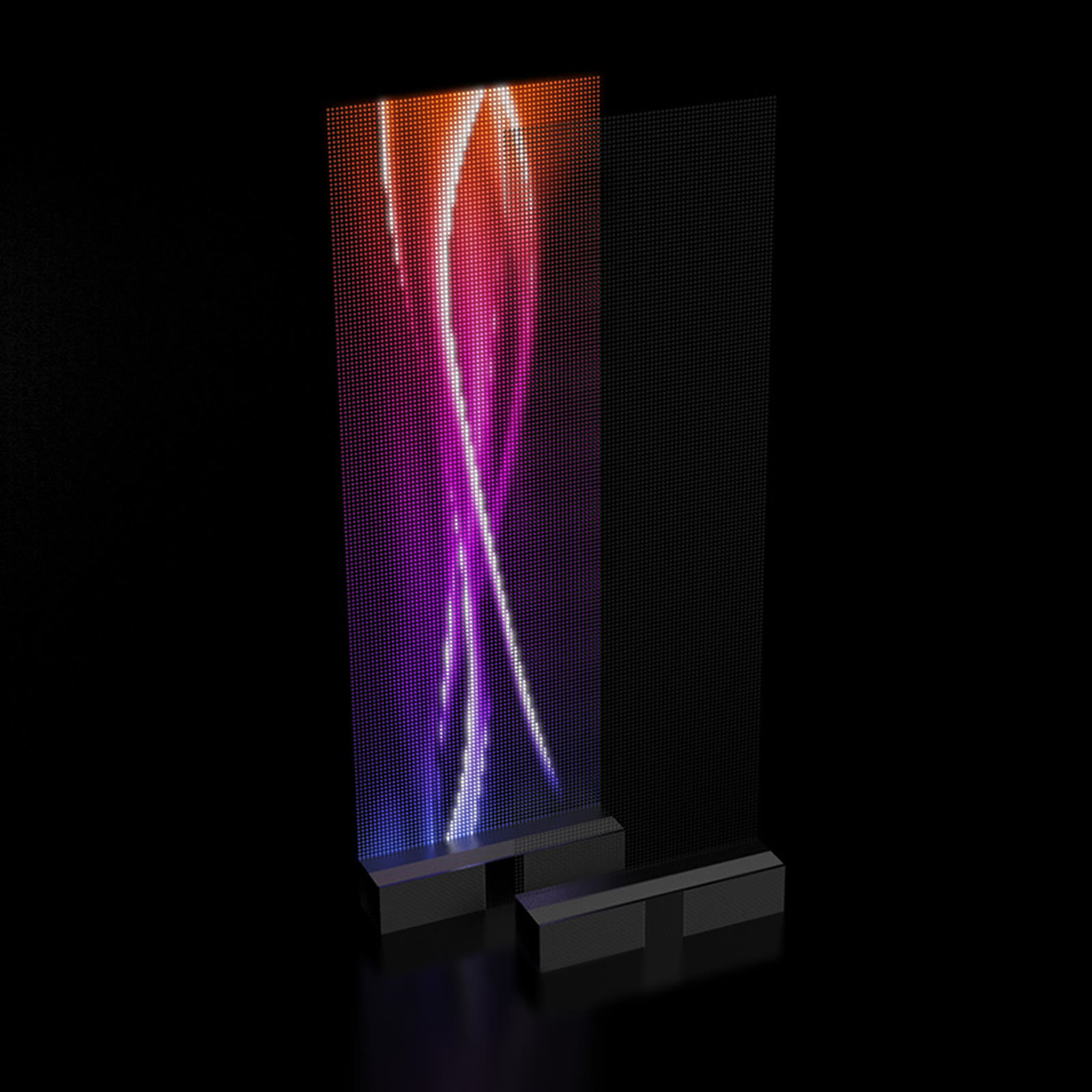
The hollow mesh circuit preserves the architecture and its daylight — when the content stops, the screen all but vanishes from the glass.
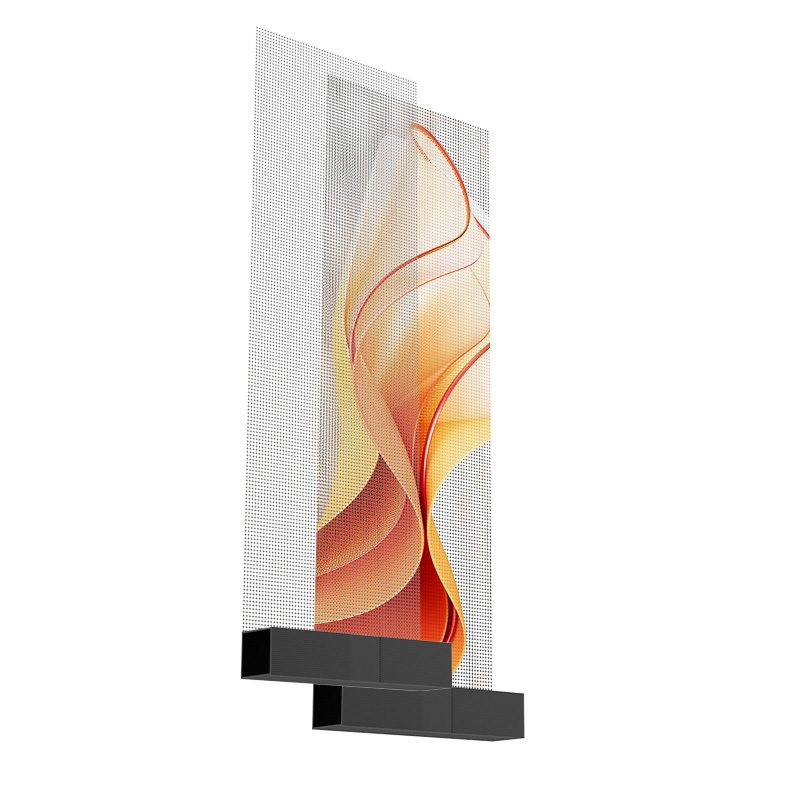
Up to 160,000 dots/m² on P2.5, 4,000:1 contrast, colour temperature tunable from 2,000–9,500 K, and 3D playback at 120 fps.
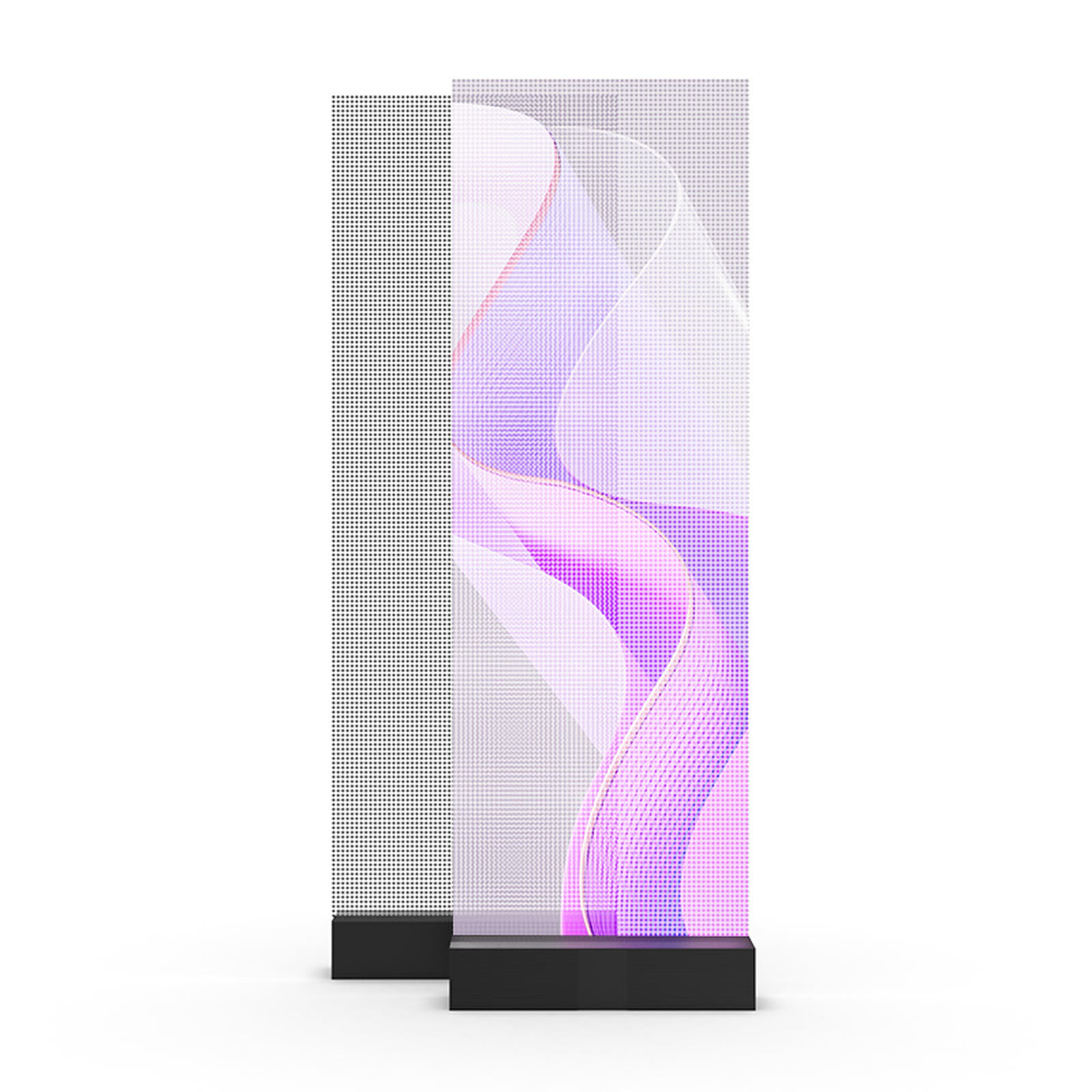
Standard modules butt-join vertically and extend horizontally without limit — one continuous image across the full glass line.
Switch between models for the full specification, or compare the whole range side by side below.
Measured, not modelled — Real-world power: factory tests measured P6.25 at just 180–300 W/m² and P3.91 at 200–280 W/m² playing video content across brightness levels — far below the white-field peak figures above.
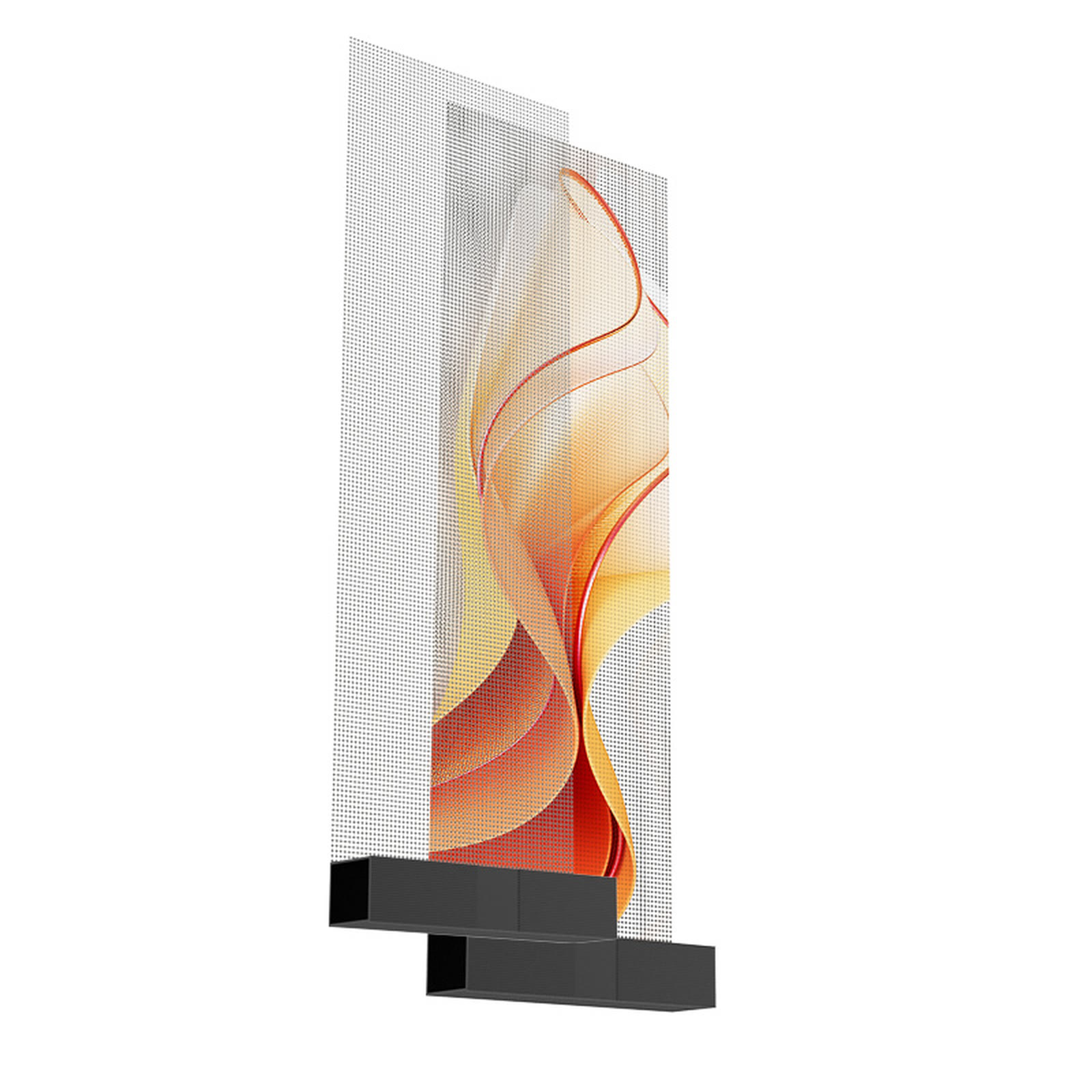
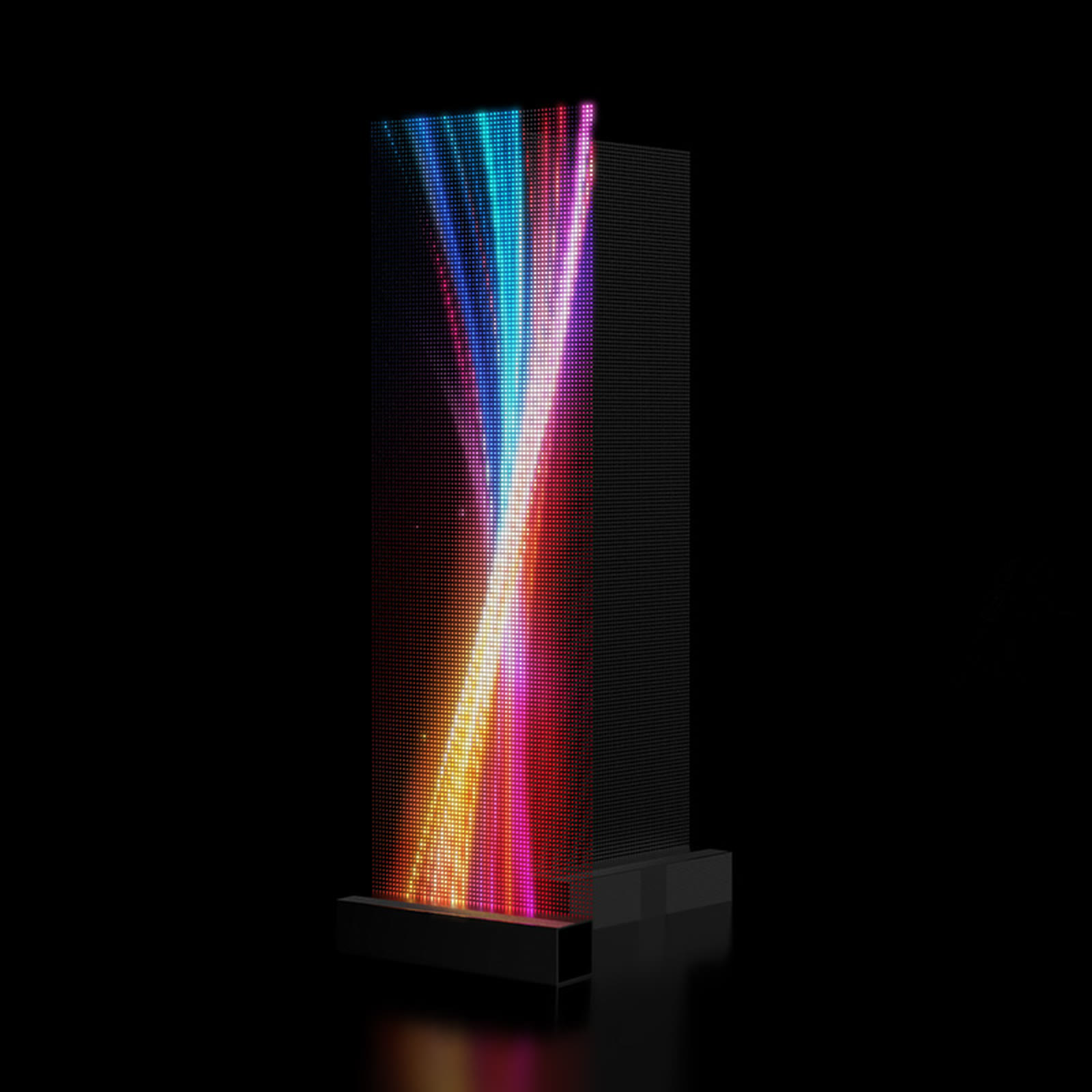
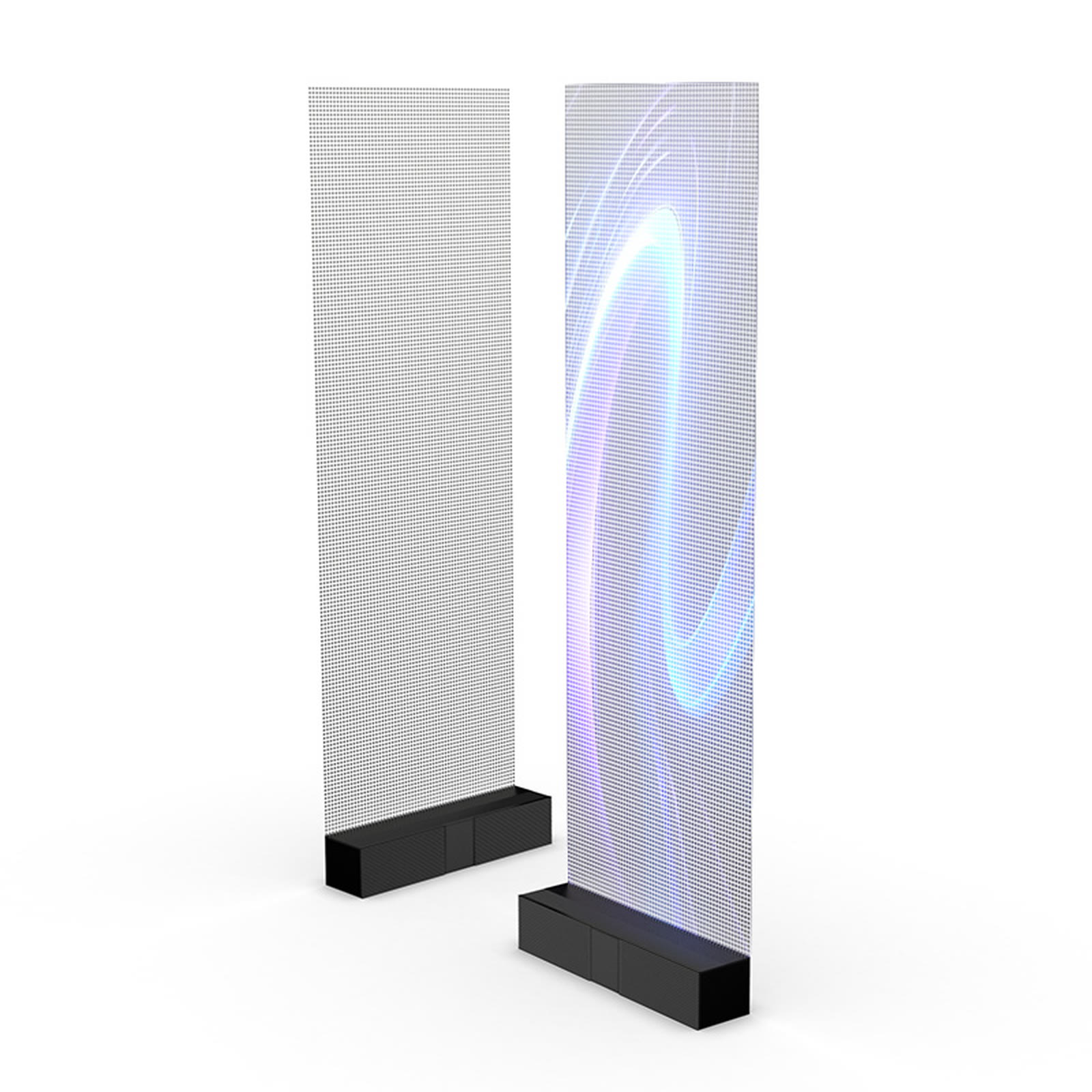
The pitch number ≈ the closest clear viewing distance in metres. P2.5 and P3.91 suit eye-level shop windows and showroom pieces viewed from 2–4 m; P6.25 is the all-rounder for storefronts and exhibition walls; P10 trades density for the highest transparency (93%) on large glass spans. Beyond tiled modules, ready-made formats are available: P2.5 / P3.91 indoor hanging posters (758 × 1323 mm and 1008 × 1623 mm) and P3.91 floor-standing or suspended ad players (1008 × 2449 mm up to 2008 × 2948 mm).
Standard modules are 250 mm wide (125 mm on P2.5) in lengths from 1035 to 1535 mm. They butt-join top-to-bottom and extend left-to-right without limit, and panels can be cut to size or curved against inner arcs — the screen follows the glass exactly.
Cut-to-size and custom layouts available per project
Tap any scene to take a closer look.
Open the vacuum bag and remove the screen body carefully — never press on the lamp beads.
Lock the fixing bracket onto the power box with a Phillips screwdriver.
Confirm the position of the first sheet, tear off the facing of the double-sided adhesive tape, and stick the sheet onto the glass.
Stick the front of the screen onto the glass and roll one side with a silicone roller until it sits stable and flush.
Screw the power-box bracket to the existing structure on site.
Open the power box, connect the network cable and power cord, power on, and commission the screen.
Hover (or tap) any project to play it.
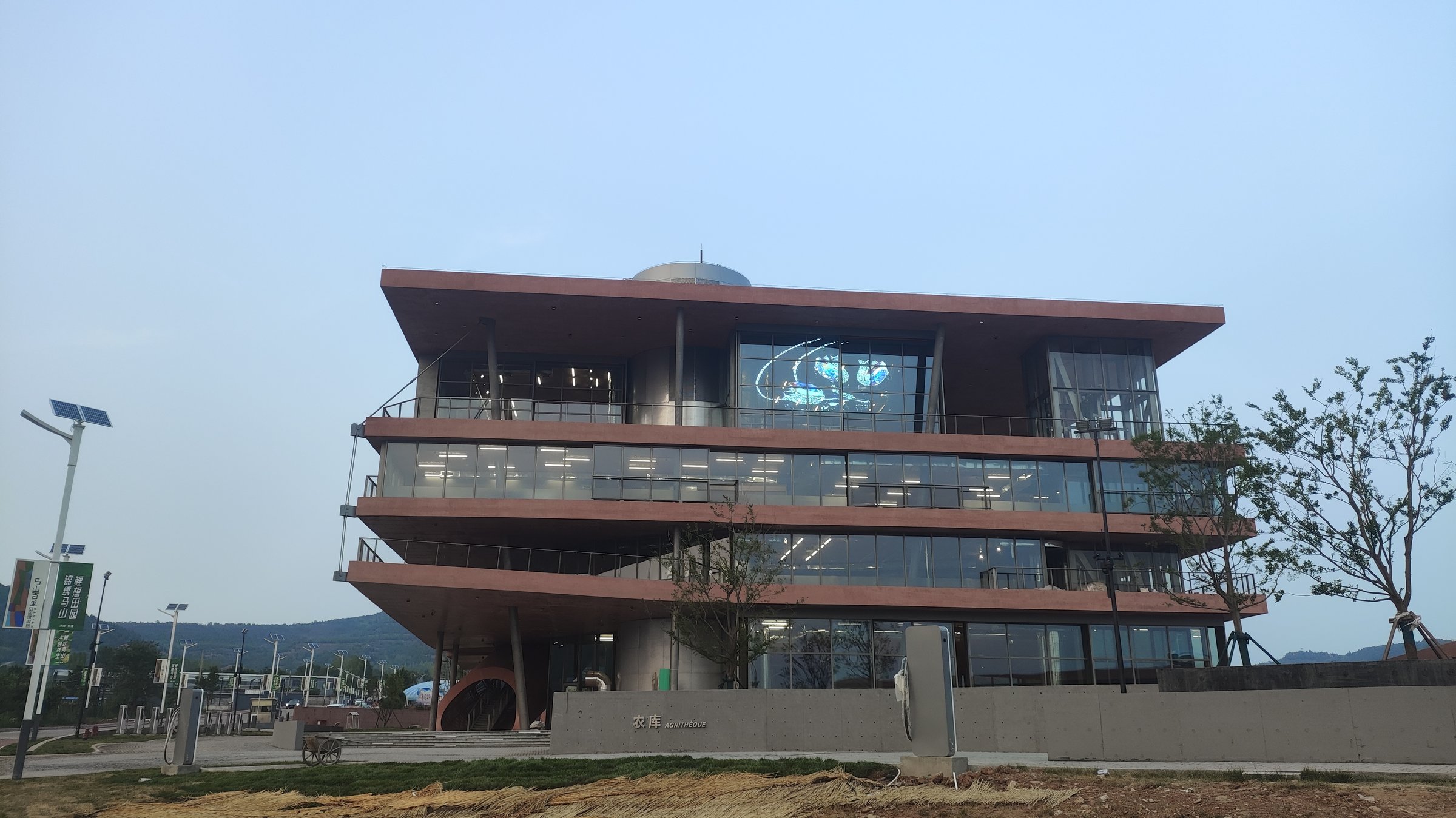
Perceived transparency runs 70–93% depending on pitch — on the wider pitches the mesh all but disappears from a few metres away, and interior daylight is unaffected.
Send the glazing dimensions and viewing distance — we'll come back with the right pitch, a clear spec, and an indicative price within 24 hours.
Self-adhesive transparent LED film — 2.5 mm thin, 90%+ transparency.
Plug-and-play flexible LED sign — app + remote control, live in 5 minutes.